Thursday, September 9, 2010

U.S. Drinks Conference 2010 coming in October

As many of you know we’re one of the organizers of the U.S. Drinks Conference. This will be the fourth year that we’ve held the event and is scheduled for Oct. 12 and 13 in New York.  Check out the website (www.USDrinksConference.com) for more details on speakers, agenda, registering, and hotel accommodations. Registrations are running at 3X the pace of last year and we fully expect to max out the room.  We moved to a bigger space this year, but indications are we'll have to expand further next.

Here are just a few of the highlights of the program:

Social Media:  Gary Vaynerchuk.  He’s been a one man revolution in the wine business in the U.S. and globally as well.  .  Gary’s cut back his speaking engagements as he’s broadened is brand to be a media and marketing consultant.  So we’re thrilled that the USDC is one of the few events that he’s kept on his schedule. (I’ll admit I was a little worried earlier this year, but thanks Gary for the commitment.)
For those of you who don’t know about him, that alone is a compelling reason to attend this year.  Word is he’s more influential to a broader audience of wine consumers than Robert Parker, Wine Spectator and Wine Enthusiast…combined.  His grasp and application of social media strategies is setting the bar very high for the wine industry.  Not only that, he’s one heck of an entertaining speaker…expect your boat to be rocked.

Complementing Gary’s speech will be a panel I’m moderating on social media and I’m particularly pleased and proud to have Tyler Colman of Dr. Vino, Colleen Graham of About.com, Christian McMahon of Heineken USA and Carter Reum of Veev Acacia spirits on the dais.  They all bring a level of expertise in social media to the discussion that’s unique their field of interest, and our focus will be on real world best practices in this new media channel.

Distributor Panel:  One of the most popular sessions, you’ll get an earful of good advice from distributors on how they decide which brands to take on and support what they expect from suppliers and how they manage and motivate their sales forces. The moderator will be our good friend Ted Roman from William Grant and panelists include Kevin Fennessey of SWS, Efren Puente of Charmer Sunbelt, Bob Hendrickson from RNDC and Jeff Altschuler of Allied Beverages.

Financial Panel:  New to the roster this year is a panel on finding financing in this changed economic climate. We’ve got speakers from some of the major VC and investment capital sources working in our industry, and I’m really looking forward to what they have to say.

As I said, details are on the site, but here’s a list of the other panels…each boasting a stellar list of industry luminaries.

  • Regulatory Panel:  Answers to the questions you didn’t even know to ask
  • Navigating (what may seem to be the labyrinth of) brand entry and distribution including price structures and logistics options
  • Supplier Panels on spirits and beer, and a separate simultaneous session on wines sharing case histories and lessons learned.
  • How to allocate marketing budgets
  • Retailer panel including on and off premise independent and chain specialists.
Sphere: Related Content

Tuesday, August 10, 2010

Reflections on Tales of the Cocktail

Having spent a necessary few days detoxifying from Tales of the Cocktail, I once again raise the rhetorical question of why we so rarely see spit buckets at spirits events, when they’re de rigueur at wine tastings?

I attended this year’s event in the company of Stephanie Jerzy who manages social media marketing for spirits at BAT, along with my daughter Lindsay Raye who is a brand ambassador in the New York market.  We were also joined by several clients including Johnny Schuler from Pisco Portón and Marc de Kuyper, Albert DeHeer and Arno van Eijmeren from Mandarine Napoleón.  It was interesting to see the event through the eyes of these folks, several of whom were Tales virgins.

My observations, in no particular order:

-New Orleans was cooler than CT…figuratively and literally that week.
-You can’t walk five feet in the Monteleone hotel (or on Royal or Bourbon St. for that matter) without seeing someone you know and REALLY want to talk to.
-It’s great to meet people in person whom you’ve only met via blogs or online
-The camaraderie and sense of community was outstanding…and it’s pretty cool when regular consumers are so interested in our business that they pay to come to what’s really a trade event.
-I’ve GOT to get my partner Jeff Grindrod to attend next year.
-the Faulkner bookstore was a pretty groovy place (and I saw a real pirate in Pirate’s Alley)
-Paul Pacult is a great presenter and guide to tasting spirits in a manner that makes the subjective, objective.
-Paul Clarke really knows his stuff or did his homework…or both.
-Darcy O’Neil always brings something new and interesting to Tales (but he does have some pronunciation issues, and I’m not talking “aboot” the Canadian accent.)
-I missed Camper English’s social media session and really wished I’d made it. 
-Spirits blogging is evolving…rapidly.  It’s no longer just a singular channel; Facebook, Twitter and the plethora of new media coming down the pike are magnifying our reach.
-Johnny Schuler has really nice manners (he stands when a woman arrives or leaves the table), and his passion for Pisco is palpable.
-Marc de Kuyper is the 11th generation of his family in the business, how cool is that!
-Francesco Lafranconi and Diego Loret de Mola are the Blues Brothers of booze, only wearing guayabera shirts and Panama hats instead of sunglasses and skinny ties.
-Sandro Bottega of Alexander Grappa is one crazy dude, and he makes some fabulous grappa.
-The Mixoloseum house was great fun, and having the shuttle van was a super idea.
-Tales is growing every year and more of the bigger brands and companies are exploiting it.  It will be important for the organizers to maintain the sense of fraternity and shared passion that has characterized the event in the past.
-Call me a Philistine and a Luddite, but I don’t think cocktails go with dinner.
-The Carousel bar at the Monteleone is a royal pain…it’s impossible to keep a conversation going when one person is moving and the other isn’t. (And the quality of drinks and bartenders there should really be top drawer at Tales showcasing what cocktails really can be and how they should be prepared and served.  I had too many mediocre drinks, but the Bloody Mary was killer.)
-I’d like to know who stole my bottle of Mandarine Napoleón XO from the Summer in Paris lunch at Antoine's. Sphere: Related Content

Tuesday, July 20, 2010

American Wine Bloggers Conference, Walla Walla, WA

We're back from the American Wine Bloggers Conference in Walla Walla,Washington (our friends in Europe get a kick out of the name) which Constance I attended. This is the third year for the event which attracted 300 attendees from the ranks of bloggers, wineries and PR agencies. We returned with enhanced perspective on the state of social media in the wine industry. 

The sense I got from the conference was that wine blogging is coalescing into something more than a loose association of citizen-bloggers.  There was general agreement that the influence of wine blogging is increasing and that both domestic and imported suppliers are starting to “get it.”  Also, the audience that reads blogs is a whole lot broader than the readers of Wine Spectator, Wine Enthusiast and the wine criticism and reviews found in the Wall Street Journal, Food and Wine magazine and the like.  But many of these are now incorporating online blogs and functionality related to their print vehicles…Andrea Robinson and Lettie Teague’s active participation at the conference being indicative of that.

And I think that’s where a distinction--and some might say chasm--between wine blogging and “traditional” wine journalism has formed.  With traditional media and wine criticism there is an implicit and commonly understood notion that it’s all related to the ultimate sale of wine. People read these in large part to find out what wine to buy for what occasion and food pairing situation. 

But for most wine bloggers, what they do is a labor of love and an avocation.  So the commercial imperative is a bit hazier.  In many cases…perhaps most…a blog generates little to no income yet takes up a lot of time and commitment.  So issues like “transparency” (a euphemism for policies on accepting samples, whether to go on sponsor-paid trips etc.)  and “ethics” (if a blogger accepts a sample or a trip, is there any responsibility expressed or implied to write about a given wine/producer/region?) came up again and again at the conference.

There is a distinct generational difference in readership as well.  It may be an oversimplification to say that Millennials only read blogs and GenX’ers and Baby Boomers read traditional media (see the VinTank report for more on this.)  But there is decidedly a real distinction between the way Millennials look at wine compared to those of an older persuasion.  In some informal research I’ve done, when you ask a  Millennial where wine comes from, the answer you’ll get is Australia, Argentina and Chile…in their world, France and Italy are irrelevant at best, unknown at worst.  The growth of irreverently labeled wine brands is an additional indication that some suppliers are seeing the democratization of wine and developing products oriented to these new consumers.

One of the other recurring themes I heard was in regard to the metrics of cause and effect and the inability to connect the dots between what’s written in posts/comments and reader activity…like purchases. Even among the PR folks working on bigger clients who one would assume have more resources available, the general consensus was there are no systems in place that allow marketers to get a read on the actual commercial impact of blogging.   Of course, that’s in large part true for the traditional print media as well.

OK, so back to the AWBC.  Cool event, great people, new relationships and a broadening of my worldview of wine and wine marketing.  I’ll be going to the European version of the event which is being sponsored by the Austrian Wine Marketing Board in Vienna in October, and will be interested to see how things are developing there. Sphere: Related Content

Friday, July 2, 2010

Sam's Gone

     We had a bittersweet goodbye for Sam Harrigan this week that unfortunately Jeff and I couldn't attend in person (but we were there in "spirit").  Sam Harrigan who's been with us for two years and helped create and shape our social media marketing skills officially left BAT for grad school.

Constance Chamberlain, Stephani Jerzy, Sam Harrigan, Anthony King and Kayla Joyce (and curious George hanging on the door) toast Sam's @BAT


   Sam, what can I say...it was a real pleasure and honor to work, learn and create with you.  I know all of our spirit blogger friends join my in wishing you best of luck in school, and we'll raise a glass or two to you at Tales in NOLA in a few weeks.
Sphere: Related Content

Wednesday, June 23, 2010

EWBC: European Wine Bloggers Conf event hosted by Austrian Wine Marketing Board

Thanks to Gabriella and Ryan Opaz for organizing a wonderful evening of tasting Austrian wines and promoting the European Wine Blogger's Conference which is being hosted by the Austrian Wine Marketing Board in Vienna Oct. 22-24 this year.

The Opaz's have been a driving force for both the EWBC and the American Wine Blogger's Conference which takes place this week in Walla Walla WA.  Constance Chamberlain and I will be in WA and I'll also be attending the EWBC.

For those of you involved in Social Media Marketing, these events represent rare opportunities to meet and talk with many of the folks we're all communicating with digitally...but it's much more fun to taste wine together physically.

Participating wineries at last night's event included Darcy and Huber Selections with an incredible array of Gemischter Satz (field blend) wines from Vienna.   D and H will also be hosting the first ever Field Blend seminar at the EWBC.  One of the wines we tasted was grown on the grounds of the Schonbrunn Palace...cool!

Klaus Wittauer of KW selections sampled us on Anton Bauer and Hillinger wines from his portfolio, and Anna Micic Viducic of Monika Caha Selections contributed their range of wines including the Neumeister Sauvignon Blanc. Sphere: Related Content

Thursday, June 17, 2010

Pisco!

We just got back from Peru visiting with Johnny Schuler and Brent Kallop of Pisco Porton.  They are on a mission to make Pisco a significant category and Pisco Porton a significant brand in the U.S. spirits market.

For those of you unfamiliar with it Pisco has a long history...it's the oldest spirit in the Americas dating back to the days of the Conquistadors and the missionaries who accompanied them.  Pisco was a major spirit category in the US and was the base spirit for a number of the most popular cocktails including the Pisco Sour and the Pisco Punch prior to Prohibition.
(l to r) Steve Raye, Sue Ritter, Brent Kallop, Johnny Schuler, Jeff Grindrod
 
Pisco is the native spirit of Peru, where it is traditionally distilled in alembic or pot stills which allows the master distiller to create a product with a very individual  style.  Chile also produces a product they call Pisco, but generally at lower prices, lower quality and via a continuous still process.  Peru's claim of Pisco's authenticity rests on the eponymous name of the town where it was born and the long history of production and association of the name Pisco with the vessels in which it was traditionally transported...also called Piscos.

Most of the Pisco produced in Peru come from the Ica Valley, an emerging region with aspirations of becoming Peru's Napa Valley.   Ica and in fact the town of Pisco itself, was the epicenter of an earthquake two years ago which caused widespread destruction of the region where many of the buildings are made of adobe.

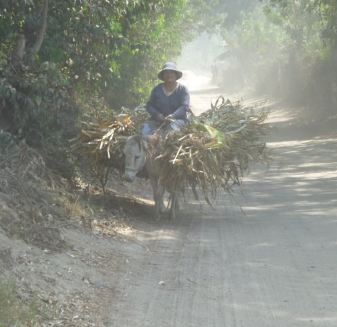
Peru has emerged from a dark period of bad government decisions and the breakup of large landholdings.  It's only recently that larger farm operations have become possible and the country is really just re-emerging on the world stage.  It is not uncommon to still see donkeys pulling carts beside signs for the local John Deere dealer. 

More to come on this subject...but I thought you'd enjoy seeing some of the pix from the trip. In addition to visiting the vineyards and distilleries, we also got a chance to fly over the Nazca lines and wonder just why they were made.
        Nazca lines "astronaut"                   Tasting Pisco Porton from the resting tank


Below, the Hacienda la Caravedo vineyards with the Andes in the background.  It's  not uncommon to see donkeys, and bottom right kiln from the 1600's used to fire the "botijas"or Piscos in which the spirit was transported.

Sphere: Related Content

Thursday, June 3, 2010

What U.S. importers expect from prospective suppliers...new post on BATblog http://ping.fm/Xkb69 Sphere: Related Content

What U.S. Importers Expect from Prospective Suppliers

     One of the things we get asked for is help for foreign suppliers to find U.S. importers.  More often than not the supplier doesn't have an accurate understanding of the U.S. Drinks market and the radically different situation that exists here vs. many other countries.  We may be one of the biggest markets in the world, but we're one of the most complicated to navigate.
     It's not as simple as the supplier asking "here's my bottle, how many containers will you take?", but rather you need to answer the importer's questions of "What's in it for me and what kind of support will you provide?"
    Here's a list of some of the more common things a U.S. importer expects a prospective supplier to bring to the table.
1.  Product for tasting in a package ready for submission to TTB
2.  Background literature in English
3.  Proposed price structure for the U.S. market three tier system
4.  Brand performance history (sales and marketing support) in key reference markets like the UK and Western Europe.
5.  Marketing Support plans including:
    -Marketing strategy and objectives
    -Budget in sufficient detail (e.g. media budget for consumer and trade, POS, PR, Online, Price support, supplier support i.e. US representative of brand ambassadors for intro year and following years based on anticipated volume
   -Brand positioning:  creative in the form of a piece of trade and consumer sales literature; and description of product key point of difference, value proposition for the consumer and identified competitive set of brands or catgory
   -Market research results validating the brand's potential in the U.S. market
   -Anticipated introductory and expansion markets and rationale for why they were chosen.

The more you are able to anticipate and answer the importer's needs and questions, the more likely you'll be able to find someone who's interested in taking on the brand. Sphere: Related Content

Friday, May 21, 2010

Wines of Santorini Event

Following right on the heels of the New Wines of Greece event, the Wines from Santorini strutted their stuff. Santorini is one of the most interesting wines in the world with a back story dating to 1650BC when the volcanic island exploded leaving only a knife edged caldera rim and caused the tidal wave that destroyed the Minoan civilization on Crete.  It is in fact considered the source of the myth of Atlantis sinking into the sea. You'll be able to read more about Santorini on the website we're working on (not live yet, but I'll announce when it is).

But since we couldn't take everyone to the Aegean, we brought the island to NY...representatives from many of the wineries were here including Paris Sigalas of his eponymous winery and Stela Kasiola, Marketing Manager for Santo Wines, (that's her in the picture and that's Oia above my left shoulder) the coop that works with all the wineries and is overseeing the EU-funded promotional program and a host of importers including Ted Diamandis of Diamond Importers and Sam Catechis of Stellar Imports.

Event attendees left with a fascinating gift bag including miniature replicas of the basket vines as well as the very special tomato paste and caper leaves and berries that are hallmarks of the island.  They also brought over some of the volcanic rock that makes up what's called "soil" in Santorini.  Lacking any signficant clay, Santorini is phylloxera-immune.  And because of the unique heading system used to renew the vines when the baskets get too long, many of the vines are hundreds of years old...nobody really knows how old. (Well, none can be older than 1650 BC...they might not have phylloxera, but they do have earthquakes.)

Most folks recognize Santorini, or more properly the town of Oia perched at the norther tip of the caldera for its iconic imgery of white washed buildings, blue domed churches and windmills overlooking an impossibly sapphire-blue sea.

But it's that iconic image that has made it a world famous tourist destination.  The downside is that many of the vineyards are more valuable as land for hotels than for making wine.  So a big driver of the promotional program is to raise awareness of the prescious resource that Santorini wine industry represents, and the jeopardy it's in from the relentless pressure of tourism.

So the best thing all of us can do is celebrate Santorini by buying some of their wine.  The key grape varietal is Assyrtiko and while it is sometimes planted elsewhere in Greece, it reaches its apogee in quality and expression of minerality,racy but balanced acidity and alcohol.  One of the noble grapes of the world, the natural affinity between Assyrtiko and seafood is one of those sublime things we get to enjoy so rarely in this world.

And it's not just Assyrtiko.  Did you know the name VinSanto originated from Santorini (Wine from Santorini).  It's a sticky that's spectactular with a nice balance of acid and sugar and we got to taste some old ones that blew my mind.  The rule of thumb I use is that the more it looks like used engine oil, the better I like it.  Nykteri is another specialty wine of the island, also with a unique backstory...it's harvested only at night.


Santorini is born from the sea, and the wines she makes marry with seafood in an almost magical way.  OK, so maybe you can't get on a plane and fly there tomorrow, but you can go out and buy the wine and see what I'm talking about! Sphere: Related Content

It's Greek To Me

Sorry for going dark for a while, we've been incredibly busy, but I'll catch up with a few posts now.

OK, so the headline quote isn't the most original, but it was thematically correct yesterday.  New Wines of Greece and the Wines From Santorni under the guidance of George Athanas and All About Greek Wine hosted a super event at Alice Tully Hall at Lincoln Center.  Food was supplied by Michael Psilakis of Anthos and it was better than fantastic.  I don't think I've ever had better haddock.  Great seminar hosted by Steve Olson and Doug Frost with an interesting twist on procedure...blind tasting, but with a bit of guidance.

MW Konstantinos Lazarakis who was acting as MC made some comments closing the NWOG session that were informative for all of us in the industry.  He was looking 10 years out and said:
1.  Being good will be irrelvant.  Good wine in the bottle is assumed.  To compete, brands will have to deliver something even more than high quality at a reasonable price.
2.  Being different is what will make sense.  Not just the provenance or a label...but what's in the glass.  People are expanding their horizons and looking for new experiences.
3.  Stories! Every wine has a story and you need a story to stand out.  What makes it unique, special.  In a sea of sameness a wine needs to be notable to compete.
4.  Drinking the wine is more important than tasting.  Greeks enjoy wine; it's the social lubricant that makes agoraphobia a word that simply doesn't signify in their country. 

There's a host of new wines coming from Greece.  We tasted the four varietals being focused on:  Aghoritiko, Moschofilero, Assyrtiko and Xinomavro, and what the wine makers are doing is nothing short of amazing. Sphere: Related Content

Tuesday, May 11, 2010

Mastering the Art of the Ah So Corkscrew

One corkscrew design I've never been able to master is the Ah So.  Supposedly great for old wines with corks of questionable integrity, more often than not I end up pushing the cork down rather than pulling it out.  Greg Del Pias, Community Manager at Snooth, and host of the NY Wine Century Club gathering demonstrates a little trick using the Screwpull worm.  Check out the video here:
http://www.youtube.com/watch?v=fBdgn3AlkYo Sphere: Related Content

Thursday, May 6, 2010

Austrian Wine Rocks NY

Austrian Wine has Arrived!

That was the vibe at Tribeca Rooftop as Willi Klinger  and his team from the Austrian Wine Marketing board hosted 80 winemakers representing the largest delegation of Austrian wineries ever to hit the shores of the U.S.

Gruner Veltliner stole the show as the lead varietal from Austria, but siblings Riesling and the reds Blaufrankisch, Saint Laurent and Zweigelt also shared the stage at a trade tasting in the afternoon followed by a sold-out crowd of consumers (it was SRO outside!) Food for the evening was provided by Wallsé; Gordon Ramsay at the London; Seasonal Restaurant; Aldea; KLEE; BLT Prime; 10 Downing Food & Wine; Salumeria Rosi; Telepan; Recette; 15 East Restaurant, and Grandaisy Bakery, giving guests the opportunity to taste the wines with food designed to showcase the wines.

Tables I visited included Niche Imports' Lenz Moser, Michael Skurnik's Brundlmayer, Winemonger's incomparable Neumayer line which absolutely blew me away, Szigeti's sparklers,  (that's me tasting the sweets with Bob O'Brien of VinDivino, Erin Grace of Winebow serving the wines from Fred Loimer and Rudi Pichler and of course the wines of Vienna from the Darcy and Huber Portfolio.

As you know BAT has been helping the AWMB with online promotion for the last year or so and we were thrilled when they stepped up to the plate to become host to the European Wine Blogger's conference to be held in Vienna next October see www.winebloggersconference.org. I'll also be attending the American Wine Blogger's conference which will be held in Walla Walla, WA in June. (Our European friends tend to chuckle when we say that name...sort of like I think Kartoffelpoofer just sounds funny.) Sphere: Related Content

Monday, April 5, 2010

On my way to WSWA and looking forward to hearing Sarah Palin's presentation. Sphere: Related Content

Whither the Future of Journalism?

One of the subjects that come up frequently in discussions about the role of blogs is, “Are bloggers journalists?” Clay Shirky,author of "Here Comes Everybody" explains it through some insightful observations which I’m paraphrasing here (really, you gotta read this book!)…

A profession exists to solve a hard problem, one that requires some sort of specialization. They exist because there is a scarce resource that requires ongoing management. The scarcity of the resource itself creates the need for a professional class. “The old dictum that freedom of the press exists only for those who own a press points to the significance of the change. To speak online is to publish, and to publish online is to connect with others. With the arrival of globally accessible publishing, freedom of speech is now freedom of the press, and freedom of the press is freedom of assembly.” And THAT explains why the Chinese government is so paranoid about Google.

For journalists, the resource (access to the means of distributing information, news, opinion) is no longer scarce, so we’re seeing the mass amateurization of the profession. And to make matters worse, when the resource was limited, an editor’s role was necessary to determine “Why publish this?” Now, the question isn’t why, it has become “Why not?” So where previously, scarcity of the means of distribution meant journalism’s function was to filter information BEFORE publication. Now filtering comes AFTER publication (think Search, Google Alerts, RSS feeds).

Another way Professor Shirky phrases it is, “If everyone can do something, it is no longer rare enough to pay for, even if it is vital.” And that’s the conundrum journalism…and many other professions created from the old constraints face.

Translate this to marketing and you can see the difficulty many command and control organizations face: “in the open source world, trying something is often cheaper than making a formal decision about WHETHER to try it.” Yowza! The result, lots of 25 year old entrepreneurs eschewing the plodding slope of corporate advancement for the philosophy of “Just Do It.” Sphere: Related Content

Sunday, April 4, 2010

Globalization of Groups and the Mechanics of Social Media

I recently finished Clay Shirky’s book “Here Comes Everybody. The Power of Organizing Without Organizations” and have become even more impressed by him as a thought leader.
If you’re interested in how the web is transforming everything, this NYU professor puts it in terms I can grok. (See Robert Heinlein’s Stranger in a Strange Land for a definition.)

The key premise of the book is that the seminal function of the Web is enabling the convening of group-forming networks. Big deal? YES! A VERY BIG DEAL.

Shirky says “Revolution doesn’t happen when society adopts new technologies. It happens when society adopts new behaviors.” We all used to hear about e-mail being the “Killer App.” He pulls back the curtain on this a bit further to reveal the real killer app was the “reply all” function in email. That was the very beginning of Social Media. Now anyone can connect with anyone else in a group environment that doesn’t require synchronicity or physical proximity.

The implications of this are profound and explain the mechanics of how social media like Twitter and Facebook are so awesomely powerful and influential. “The web has lowered the hurdles to doing something in the first place, so that people who cared a little could participate a little while being effective in the aggregate. Having a handful of highly motivated people and a mass of barely motivated ones used to be a recipe for frustration. The people who were on fire wondered why the general public didn’t care more and the general population wondered why those obsessed people didn’t just shut up. Now the highly motivated people can create a context more easily in which the barely motivated people can be effective without having to become activists themselves.”

Add to the mix the tendency for us to trust the opinions of peers (think the Amazon “if you liked this, you might also like this” and we begin to see the implications of how this all scales up.

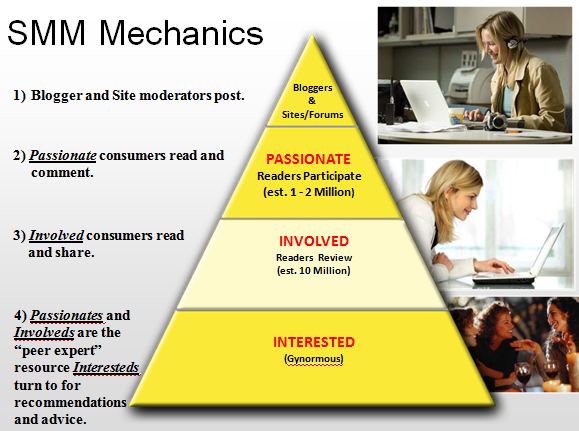
We’ve created this visual to explain the (I hate using this word, but it works here) viral nature of Social Media like blogs, sites, forums et al.


The important thing to recognize is that the post on a blog or forum is just the beginning, not the end. Sphere: Related Content